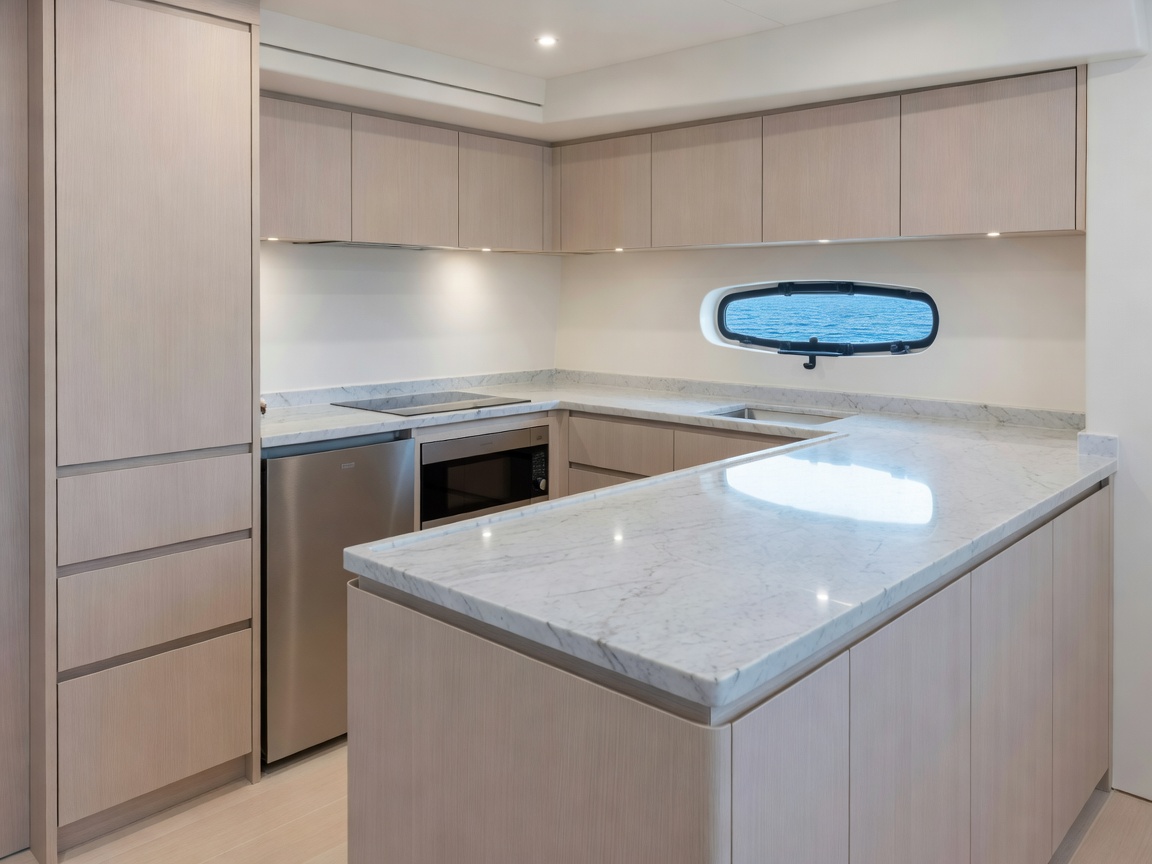
Yacht kitchens are compact working environments rather than decorative kitchens reduced in size. The brief must account for workflow, storage, ventilation, moisture, cleaning and the way the vessel is actually used. A beautiful cabinet front cannot compensate for a drawer that cannot open fully or a worktop that leaves no useful landing space.
Map the working triangle differently
Start with the movement between cold storage, preparation, cooking and serving. Onboard, the route may also involve companionways, doors and a serving hatch. Observe how people work during a normal day rather than relying only on a plan. The best layout often protects one clear preparation surface and keeps frequently used items close to hand.
Storage should reflect the inventory: pans, tableware, provisions, cleaning supplies and small appliances all need a deliberate home. Deep cupboards can waste space if their contents become inaccessible. Pull-outs, drawers and adjustable shelves may improve visibility, but hardware must be selected for the environment and the expected use.
Choose surfaces with care
Countertops should be considered for appearance, cleaning and the number of seams or vulnerable edges. Stone, composite and carefully detailed solid surfaces can create a calm visual plane, while a contrasting timber detail softens a harder scheme. Cabinet fronts may be veneer, lacquered, painted or composite; each offers a different balance of repairability, visual warmth and maintenance.
Brushed metal hardware can connect the galley to other interior details, but it should not become a decorative afterthought. Handles need to be comfortable, easy to clean and placed so they do not interrupt adjacent doors. Hinges, drawer runners and latches deserve the same attention as the visible finish.
Appliances, ventilation and moisture
Think of appliances as categories first: refrigeration, cooking, extraction, dishwashing and small preparation equipment. The right selection depends on available services, capacity needs, access and the existing arrangement. Ventilation should be discussed early, particularly where a new hood, grille or enclosure changes airflow or maintenance access.
Moisture and food residue make cleaning access important. Avoid creating narrow ledges and awkward junctions that collect debris. Sealant, splashback details, floor transitions and the meeting of worktops with walls all deserve a clear maintenance strategy. None of this needs to look utilitarian; precise detailing can be quiet and elegant.
Refurbishment choices
Surface-led update
Good for: a functional galley with tired fronts and hardware.
Pros: keeps much of the existing arrangement.
Watch for: hidden moisture damage, obsolete fittings and poor access.
Planning-led refurbishment
Good for: inefficient workflow or insufficient storage.
Pros: resolves use, appearance and joinery together.
Watch for: service coordination, access routes and longer disruption.
Ergonomics are personal, so involve the people who cook and clean most often. Ask where they reach, bend, carry and pause. A galley should feel composed when empty and forgiving when busy. Its finish level can be refined, but its logic should remain obvious.